Frankenstein by Mary Shelley
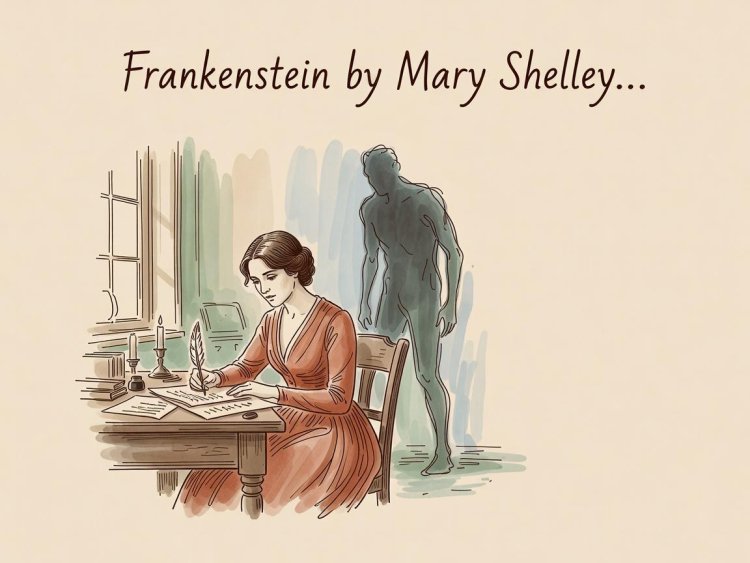
Few novels have cast as long a shadow as Frankenstein. Written by Mary Shelley when she was only nineteen, it remains one of the most powerful and unsettling stories ever told about creation, responsibility, and what it means to be human. More than two hundred years later, it still feels urgent.
The story is framed as a series of letters and confessions. At its center is Victor Frankenstein, a young scientist obsessed with discovering the secret of life. Driven by ambition and a desire to push beyond the limits of science, he succeeds in creating a living being from dead matter. But once his creation opens its eyes, Victor is horrified by what he has made. He abandons the creature, leaving it to fend for itself in a world that immediately rejects it.
What follows is not the simple “mad scientist” tale many people assume. Shelley’s novel is far more complex and tragic. The creature — often mistakenly called Frankenstein — is intelligent, sensitive, and deeply lonely. Rejected by everyone he encounters because of his appearance, he gradually turns from a being who longs for connection into one consumed by rage and a desire for revenge. The relationship between creator and creation becomes a devastating cycle of abandonment, suffering, and destruction.
One of the most remarkable things about Frankenstein is how modern it feels. Written in 1818, it raises questions that are still fiercely debated today: What responsibilities do we have toward the things we create? Where should science draw its ethical boundaries? What happens when we play god without considering the consequences? Shelley doesn’t offer easy answers. Instead, she shows the devastating human cost of unchecked ambition and the failure to take responsibility for one’s actions.
The novel is also a profound exploration of loneliness and the need for connection. The creature’s pain comes not just from his appearance, but from being completely alone in the world. His desperate attempts to find acceptance, and his eventual turn toward violence when those attempts fail, make him one of the most tragic figures in literature. Shelley forces readers to confront uncomfortable questions: Who is the real monster — the creature who commits terrible acts, or the man who created him and then refused to take responsibility for what he had done?
Mary Shelley’s writing is both atmospheric and emotionally precise. The novel moves between the icy landscapes of the Arctic, the mountains of Switzerland, and the quiet horror of domestic spaces. The settings are never just background; they reflect the inner states of the characters. The cold, desolate imagery that runs through the book mirrors the emotional isolation at its heart.
What makes Frankenstein especially powerful is that it refuses to let readers take the easy side. Victor is not a simple villain, and the creature is not a simple monster. Both are deeply flawed, and both are capable of great harm. Shelley shows how suffering can twist even the most innocent being, and how pride and fear can prevent people from doing what is right. The result is a story that feels morally complex rather than black and white.
The frame narrative — told through the letters of Captain Walton — adds another layer. Walton’s own ambitions echo Victor’s, and his growing understanding of Victor’s story forces him (and the reader) to reconsider the cost of reckless pursuit. This structure gives the novel a sense of warning without ever becoming preachy.
Frankenstein is often remembered as a horror story, and it certainly contains terrifying elements. But it is also a deeply philosophical novel about creation, abandonment, and the search for meaning. It asks what we owe to the beings we bring into the world — whether they are children, inventions, or ideas — and what happens when we turn away from that responsibility.
The novel has been adapted countless times, and the image of the monster has become part of popular culture. Yet the book itself is richer and more tragic than most adaptations suggest. Shelley’s creature is not the inarticulate brute of many films. He is eloquent, thoughtful, and heartbreakingly aware of his own isolation. Reading the original novel reveals a depth and humanity that popular versions often miss.
At its core, Frankenstein is a story about the dangers of creation without compassion, and the terrible cost of refusing to take responsibility for what we bring into being. It remains one of the most profound meditations on science, ethics, and loneliness in all of literature.
If you’ve only encountered Frankenstein through movies or pop culture, the original novel is well worth reading. It is darker, more thoughtful, and far more moving than most people expect.
I’d love to hear from you — have you read Frankenstein?