How to Judge the Reliability of a Used Book Seller’s Description
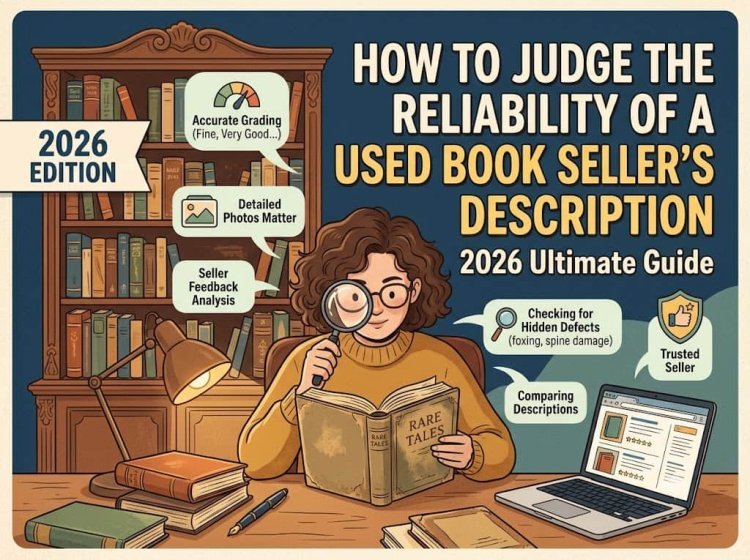
In 2026, one of the smartest ways to build a great library on a budget is to purchase used books online. But there’s one problem that’s the same for everyone: the book comes nothing like the seller promised.
I’ve been burnt more times than I can count—books marked “Very Good” that looked like they survived a war. After years of trial and error (and many returns), I’ve developed a reliable system to judge seller descriptions before clicking “Buy”.
This guide will assist you to avoid disappointment and find truly great copies.
Why Seller Descriptions Are More Important Than You Think
Most major platforms (Amazon, AbeBooks, eBay, ThriftBooks, etc.) have standard condition grades such as “Like New” or “Very Good” or “Good.” These grades can be useful, but they are only a starting point. The real story is in the seller's own words & photos.
A good description can save you time and money. A vague or misleading one wastes them both.
Used Book Guide (2026) Standard Condition
Here's what the most common grades really mean in practice:
Pro Tip: Always read the seller’s custom notes. A 'Very Good' book with 'tight binding, clean pages, minor shelf wear' is a lot different than one that just says 'Very Good – may have highlighting.'
Different Seller Types & Their Reliability
Not all sellers describe books in the same way.
Mega Sellers
Often big volume, stock photos and basic descriptions. True in general, but not too detailed. Great for cheapo reading copies.
Independent Bookshops
The most dependable. They really look at all the books, take detailed notes and often add real pictures. Totally worth the extra money.
Individual / Casual Sellers
Variable, high. Some are careful book readers. Some are haphazard. Carefully read through their feedback.
My 7 Step Pre-Purchase Checklist
Whenever you’re thinking of a used book, use this:
1. Ignore the grade label first – Read the full description and notes
2. Request real photos – Skip listings that only have stock images.
3. Check seller feedback – Look for 98%+ positive and read recent negative reviews.
4. Check out other listings – Are their items showing care and attention to detail?
5.Compare price to condition — If it sounds too good to be true, it likely is.
6. Google the seller — Often a quick search reveals patterns.
7. Ask questions. Good salespeople are quick to help and respond.
Common Seller Phrases and What They Really Mean
“Some shelf wear” → Undefined. It can be a little thing or a big thing.
Has stamps and stickers. "Ex-library" Solid, but not a collector’s item.
“Tight binding” → Good sign – book hasn’t been opened roughly.
“Remainder mark” Tiny dot/line on rim. Can’t be “like new.”
“In good shape for its age” → 2. Red flag. Often covers up real problems.
What to Do When the Book Arrives in Bad Shape
1. Take good photos as soon as possible.
2. Approach the seller with evidence politely.
3. If no good response, use platform buyer protection (Amazon A-to-z Guarantee, eBay Money Back, etc.)
If you have proof, most reputable platforms will take your side.
Last Thoughts
Learning to judge used book descriptions can turn you from a hopeful buyer into a confident one. The treasure is out there – you just need the right tools to discover it.