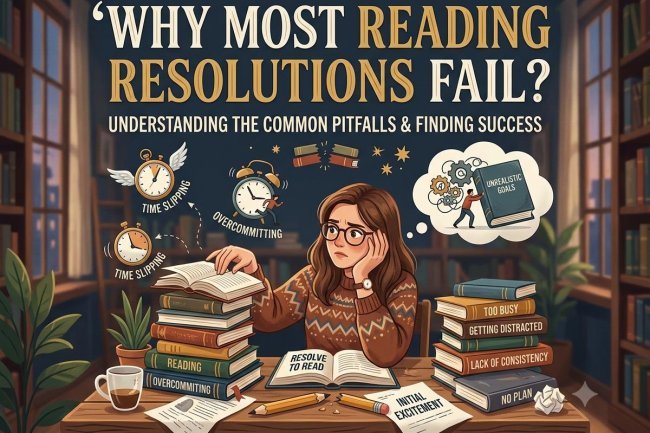
How to Read More Books Without Sacrificing Your Life?

I have wanted to read more for years, but always felt I didn’t have time. My days were filled with work, family, socialising, exercise and endless scrolling. I only read 19 books in 2024. By the end of 2025, using the system I’m about to share, I read 67 books while holding down a full-time job, working out, and maintaining a social life.
You don’t have to give up much to read more. It necessitates more sophisticated systems. Here's the full strategy I used in 2026 to massively increase my reading volume, without sacrificing other important responsibilities, or burning out.
1. The Mindset Change That Made The Difference
Time wasn't the problem, it was how I looked at reading. I previously perceived it as a substantial, dedicated endeavour that necessitated an idyllic evening of solitude. And then everything changed when I started to think of reading as an activity you can do in brief bursts throughout the day.
My new perspective: Reading is not a “event.” It is a habit that fits into the voids of daily life.
2. The Awakening Exercise: Audit Your Current Time
I kept track of how I used my time, in minute detail, for one week. The results blew me away:
The average person spends 2 hours and 40 minutes scrolling on their phone each day.
TV watching time 1 hr 15 min
The time spent waiting in waiting rooms, on commutes and in transitions: almost 50 minutes a day.
That was enough time to read over 40 books a year, even if only some of the time was moved to reading.
3. Build “Micro Reading” Habits
The foundation was these simple habits:
Morning: Have coffee and read 15 to 25 pages of hard fiction or nonfiction.
Commute/Walk: Audiobook (I 'read' 21 books this way last year)
In the evening, I prefer to read 20-30 pages of fiction before retiring for the night, rather than using my phone.
Waiting time (e.g., lines at the doctor’s office) Kindle app on mobile device
The average reading time is 45-70 minutes per day, broken into digestible chunks.
4. Guard your reading time jealously
I now treat my reading time like important appointments:
There is no telephone in the bedroom after 10.00 p.m
I turn down some social invitations in an effort to protect my reading time, and have one “reading evening” a week that is screen-free except for the Kindle.
The important thing is balance; I didn’t take away the fun. I just got more deliberate.”
5. Pick Books Strategically
I stopped buying books that were just temporarily popular. Instead I concentrate on:
Books that match my current energy and schedule
Some easy, some hard, some short, some long
I only watch series when I know I will binge them.
My completion rate jumped significantly because of this.
6. Utilise technology without allowing it to dictate your actions
to be able to monitor Goodreads and Kindle.
Libby is an app that lets you borrow free audiobooks and ebooks from your library.
The phone is in focus mode when reading blocks.
A physical bookshelf for those "special" books that I want to have on display and appreciate.
7.My weekly and monthly schedule
Weekly: 1.
Objective: Minimum 120-150 pages
One weekend morning extended reading session
Monthly:
Assess the work that I have done and the things that went well.
Alter the “Next Up” list for the next month.
– Special anniversaries (every 10 books, I buy a new, high quality edition).
Real Data from My Journeys
I finished 19 books in 2024 and I feel so guilty.
2025: 67 books finished, enjoyment factor much higher.
Time spent: There is actually less "dedicated" reading time than there used to be, as it is now a part of daily life.
My health, relationships, or job, I did not sacrifice. I have stopped doing things that are not worth it, and replaced some of my time with reading.
Typical Errors and Ways to Steer Clear of Them
Burnout: I allow for “easy” reading weeks in chaotic times.
Losing momentum. I always have the next book lined up before I'm finished with the current one.
Guilt: I tell myself that DNF is smart, not a failure.
To finish
You don’t need more time to read more books. You need better systems, more realistic expectations and the willingness to make reading a part of your daily routine instead of waiting for ideal circumstances.
This week, try this simple change: Keep track of your time for three days, and replace 30 minutes of scrolling with reading. Subsequently, construct. The results build up at a rate that outpaces your expectations.