Braiding Sweetgrass
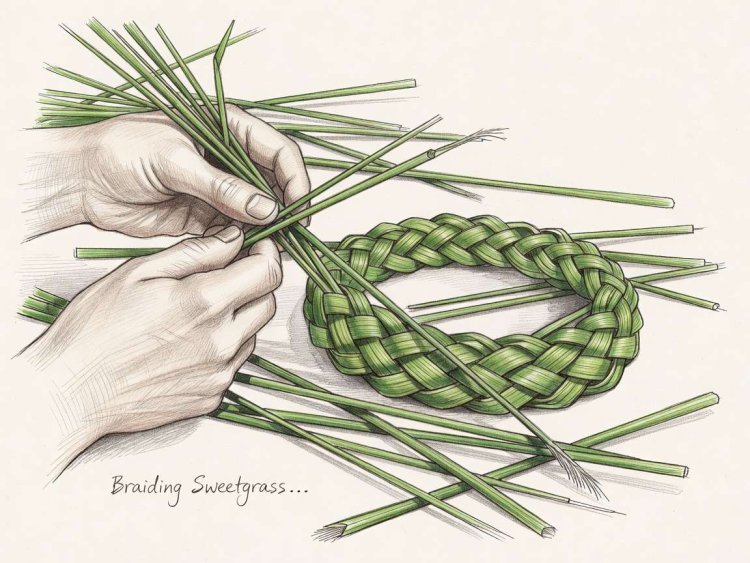
Some books don’t just inform you — they quietly shift the way you see the world around you. Braiding Sweetgrass is one of those rare works. Robin Wall Kimmerer, a botanist and member of the Citizen Potawatomi Nation, brings together two ways of knowing: the rigorous lens of Western science and the deep, reciprocal wisdom of Indigenous knowledge. The result is a book that feels both intellectually rich and profoundly moving.
At its heart, Braiding Sweetgrass is an invitation to remember that we are not separate from the living world, but part of it. Kimmerer writes about plants not as resources to be used, but as teachers and relatives who offer gifts — if we are willing to pay attention and give something back in return. She uses the image of braiding sweetgrass as a central metaphor: three strands representing Indigenous knowledge, scientific knowledge, and the stories that connect them. When woven together, they create something stronger and more beautiful than any strand alone.
The book moves between personal stories, scientific observation, and traditional teachings. Kimmerer writes about the “grammar of animacy” in Potawatomi language, where plants and animals are not referred to as “it,” but as living beings deserving of respect. She reflects on the “Honorable Harvest” — the Indigenous practice of taking only what is given, using everything taken, and giving thanks and reciprocity in return. These ideas are not presented as abstract philosophy. They are grounded in real moments: harvesting wild strawberries, caring for a garden, walking through a forest, or watching her daughters grow up.
What makes the writing so powerful is how Kimmerer blends the personal with the larger ecological and cultural picture. She writes about her own journey as an Indigenous scientist trying to bridge two worlds that have often been kept apart. She shares stories of loss — both personal and collective — but also of resilience and the quiet ways the land continues to offer healing. Her voice is warm, clear, and deeply respectful, never preachy or overly romantic.
One of the most moving sections of the book explores the relationship between humans and sweetgrass itself. Kimmerer explains how sweetgrass thrives when it is harvested with care and gratitude, and how the act of braiding it becomes both a practical craft and a spiritual practice. These moments turn what could have been a simple nature book into something much deeper: a meditation on gratitude, responsibility, and the joy of being in right relationship with the world.
Kimmerer also writes honestly about the damage caused by disconnection — from the land, from each other, and from the more-than-human world. She doesn’t shy away from difficult truths about colonization, environmental destruction, and the ways Western science has sometimes been used to exploit rather than understand. Yet even in these moments, her tone remains generous. She focuses on what we can still learn and how we might begin to repair our relationships with the living world.
What many readers find especially valuable about Braiding Sweetgrass is how it offers both wisdom and hope without ignoring reality. It doesn’t promise easy solutions, but it does suggest that change is possible when we learn to listen again — to the land, to plants, to the knowledge systems that have sustained Indigenous communities for thousands of years. Kimmerer shows that science and traditional knowledge don’t have to be in conflict; when brought together with respect, they can help us live more wisely and gratefully.
The writing itself is beautiful without being showy. Kimmerer has a gift for making complex ideas feel intimate and accessible. Whether she is describing the life cycle of a maple tree, the experience of teaching university students, or the quiet joy of making maple syrup with her family, her observations feel grounded and alive. The book rewards slow reading. Many people find themselves returning to certain passages again and again.
At its core, Braiding Sweetgrass is an act of generosity. Kimmerer shares not only knowledge but also a way of being in the world — one rooted in gratitude, reciprocity, and the understanding that we are part of a larger living community. It is a book that encourages readers to pay closer attention to the plants and animals around them, and to consider what gifts we might offer in return.
If you’re looking for a book that combines science, Indigenous wisdom, and personal reflection in a way that feels both wise and deeply human, Braiding Sweetgrass is a powerful place to begin.