Pride and Prejudice by Jane Austen
Few novels have remained as alive and beloved as Pride and Prejudice. More than two hundred years after it was first published, Jane Austen’s story of Elizabeth Bennet and Mr. Darcy continues to feel remarkably fresh. It is funny, sharp, romantic, and surprisingly wise about human nature. At its heart, it is a story about learning to see people — and ourselves — more clearly.
The novel opens with one of the most famous first lines in literature: “It is a truth universally acknowledged, that a single man in possession of a good fortune, must be in want of a wife.” From that moment, Austen sets her sights on the marriage market of early 19th-century England, but she does so with a keen eye for social absurdity and a deep understanding of character. The story follows Elizabeth Bennet, the second of five daughters in a family of modest means. When the wealthy and reserved Mr. Darcy enters her world, the two immediately clash. Elizabeth finds him proud and disagreeable. Darcy, for his part, is both drawn to and unsettled by her lively mind and independence.
What makes the novel so engaging is how Austen uses their relationship to explore larger themes without ever becoming preachy. Through Elizabeth and Darcy’s misunderstandings, arguments, and gradual change, she examines pride, prejudice, class, reputation, and the difference between first impressions and real understanding. The famous line about Darcy’s pride and Elizabeth’s prejudice is only the beginning. As the story unfolds, both characters are forced to confront their own flaws and the ways they have misjudged others.
Austen’s greatest strength in this novel lies in her characters. Elizabeth is one of the most appealing heroines in literature — intelligent, witty, and unafraid to speak her mind, even when doing so goes against social expectations. She is not perfect, and her mistakes in judgment are central to the story. Darcy, meanwhile, begins as an almost comically stiff and superior figure but slowly reveals layers of integrity, shyness, and genuine feeling. Their evolving relationship is one of the most satisfying in fiction because both people have to grow in order for it to work.
The supporting cast is equally memorable. Elizabeth’s mother, Mrs. Bennet, is a brilliant comic creation — anxious, loud, and obsessed with marrying off her daughters. Her father, Mr. Bennet, is dry and ironic, often retreating into his library to escape the chaos of his household. The sisters — sweet Jane, silly Lydia, and the others — each represent different possibilities for women of their time. Then there are the unforgettable side characters: the obsequious Mr. Collins, the haughty Lady Catherine de Bourgh, and the charming but unreliable Mr. Wickham. Austen sketches them all with precision and humor, making even the most ridiculous figures feel real.
What is often overlooked in discussions of Pride and Prejudice is how serious Austen is beneath the sparkling surface. The novel is deeply concerned with the limited options available to women in her society. Marriage is not just a romantic matter — it is an economic necessity for most women. Elizabeth’s refusal to marry for security alone, even when the stakes are high, was quietly radical for its time. Austen never lectures, but through Elizabeth’s choices and observations, she makes a powerful case for self-respect and clear judgment.
The dialogue in the novel is another reason it has endured. Austen’s characters speak with wit and precision, and their conversations reveal as much about them as their actions do. The verbal sparring between Elizabeth and Darcy is especially delightful. Their arguments are charged with tension, intelligence, and growing attraction. Few writers have captured the electricity of two sharp minds circling each other as well as Austen does here.
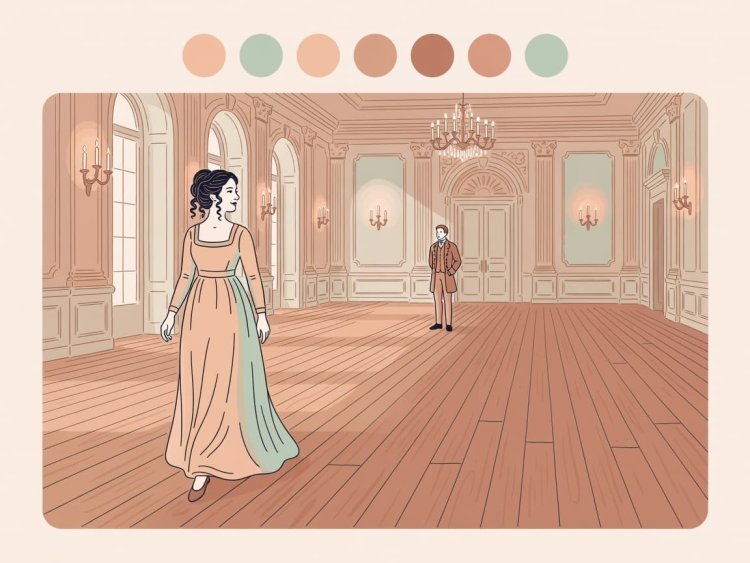
The novel’s structure is also masterful. It moves with perfect control between social comedy and deeper emotional moments. The famous scenes — the assembly ball, the Netherfield ball, Elizabeth’s visit to Pemberley, and the various proposals — are all perfectly paced. Austen knows exactly when to let the humor land and when to let silence or a single line carry real emotional weight.
What continues to draw readers to Pride and Prejudice is how well it understands people. Austen shows us characters who are capable of change, but only when they are willing to look honestly at themselves. The story suggests that real connection requires both self-knowledge and the humility to revise our first impressions. In a world that often rewards snap judgments and surface appearances, this remains a quietly radical idea.
Whether you’re reading it for the first time or returning to it again, Pride and Prejudice offers the rare pleasure of watching two complicated people slowly see each other clearly — and, in doing so, see themselves more honestly too. It is a novel that feels both of its time and remarkably timeless.
I’d love to hear from you — have you read Pride and Prejudice?